
When FWI is a primary objective, acquisition design must be informed directly by inversion requirements — not constrained solely by legacy imaging rules.
Seismic survey design has traditionally been guided by established imaging principles. Parameters like offset, sampling, and bandwidth are usually chosen based on standard industry practices to provide sufficient illumination for conventional migration.
However, many of these conventions pre-date the widespread use of Full Waveform Inversion (FWI). They implicitly reflect limitations that modern inversion workflows can now overcome—provided the acquisition supports it.

ACTeQ’s work, including contributions from Dave Monk, focuses on designing acquisition geometries that balance both FWI and conventional imaging objectives. The goal is to ensure surveys deliver the offsets, sampling, and coverage required to support modern inversion techniques while maintaining robust conventional imaging performance.
Rather than relying on inherited rules of thumb, geometry is assessed against inversion physics and intended depth range.

To assess whether a survey will adequately support FWI, ACTeQ uses diving-wave analysis to evaluate whether the planned offsets and sampling are sufficient over the depth range of interest.
This moves beyond simplified heuristics such as maximum offset divided by three. Instead, subsurface-based modelling is used to examine turning-wave penetration realistically.
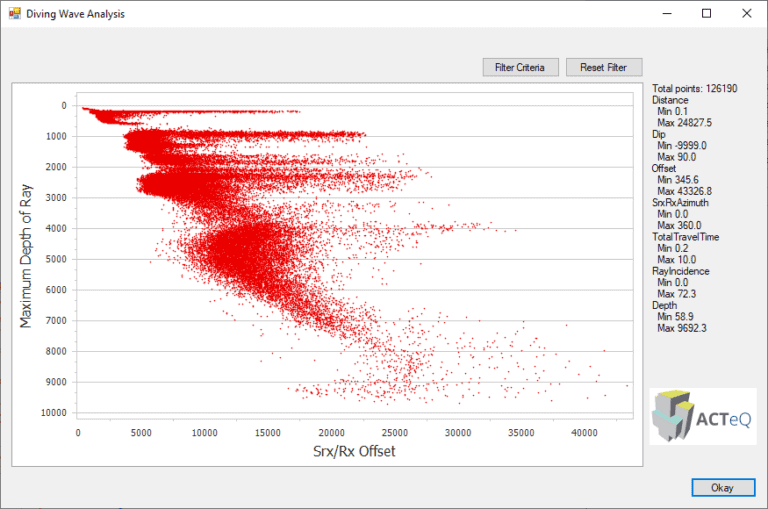
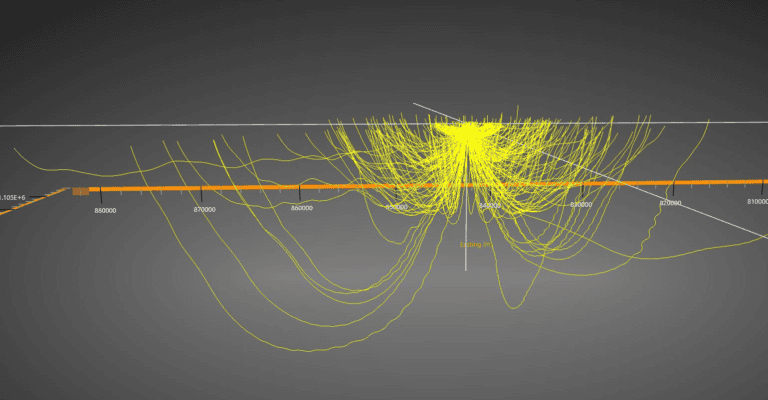
By aligning sampling density with inversion physics, acquisition can be optimized for both performance and cost efficiency.
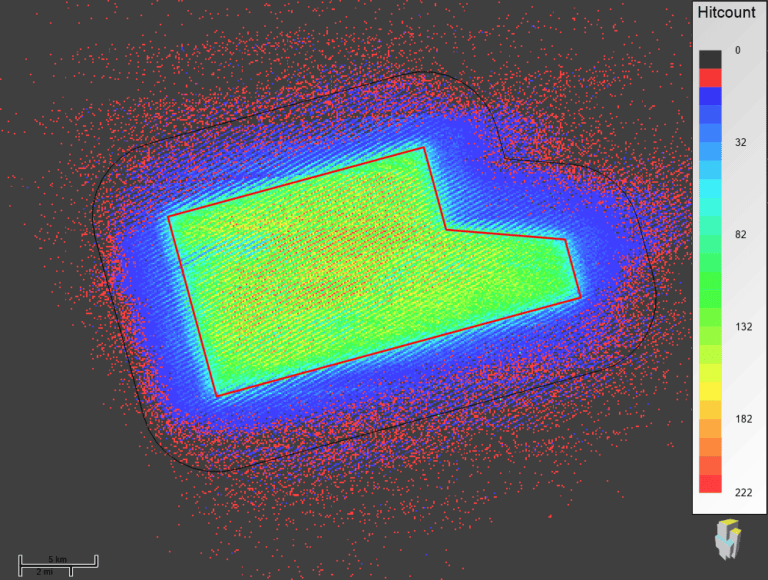
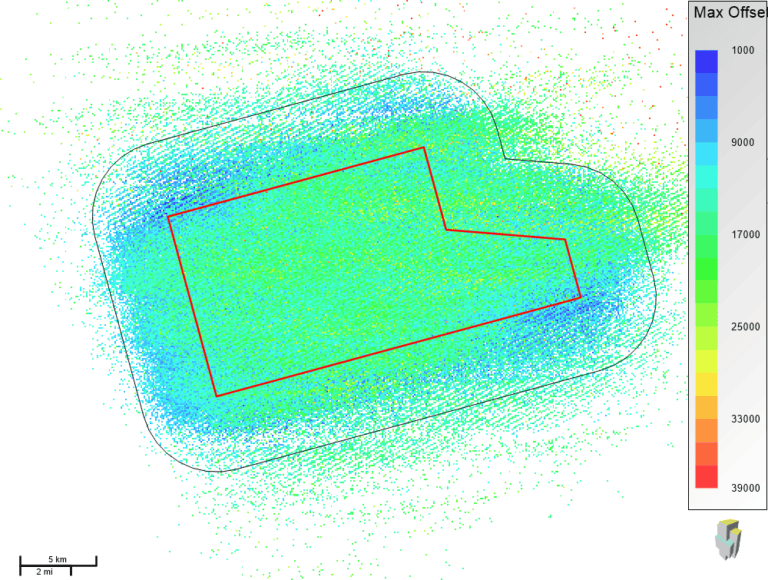
Heat-map analysis is used to confirm that diving waves of interest are consistently recorded across the survey area. This ensures turning waves are present where required and sampling gaps are identified early.
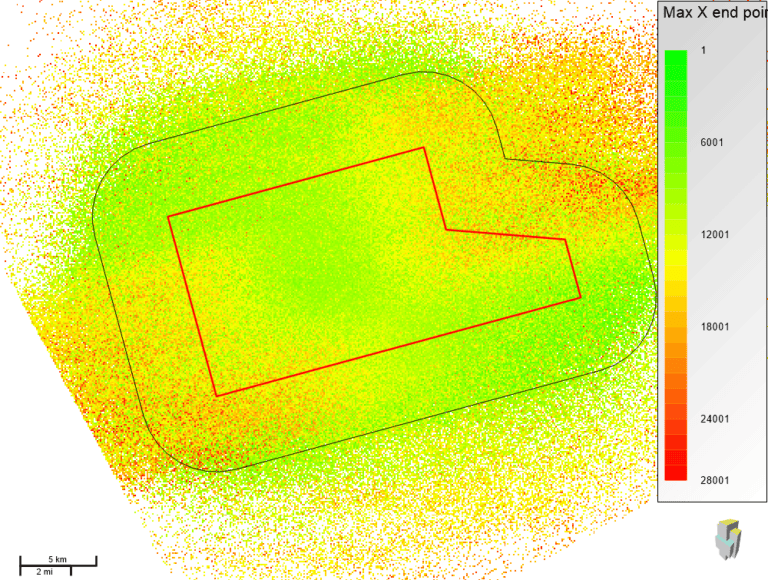
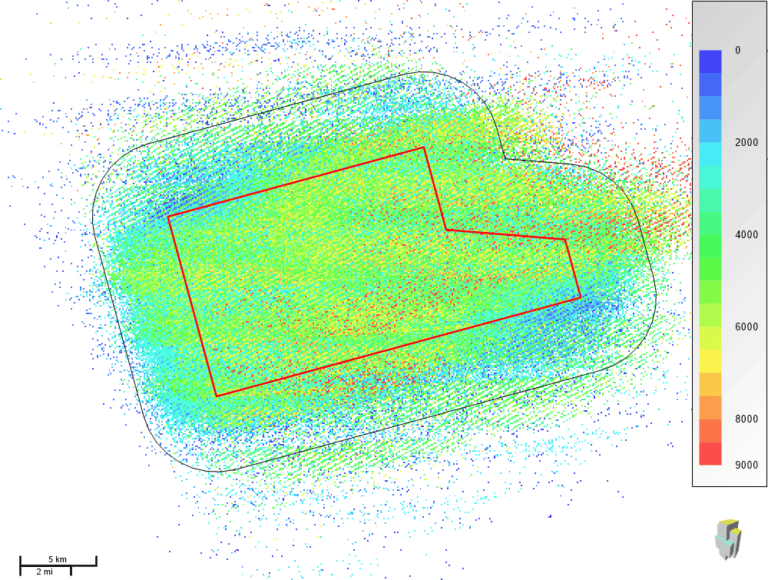
In shallow-water OBN environments, survey design is informed by analysis of water-bottom multiples. Rather than treating multiples purely as a processing challenge, they become part of the design solution.
These provide valuable contributions to shallow illumination, near-offset requirements, and inversion stability.
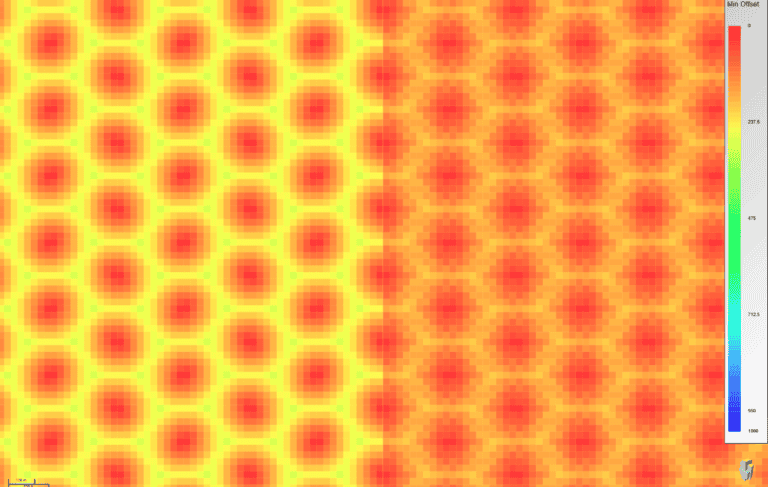
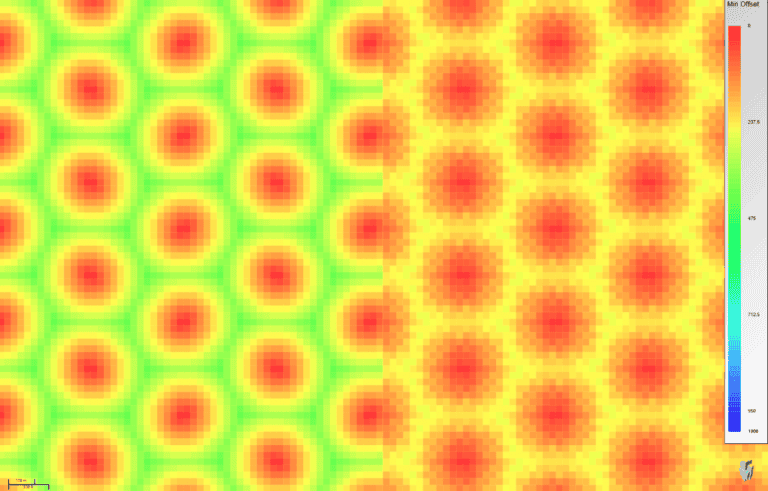
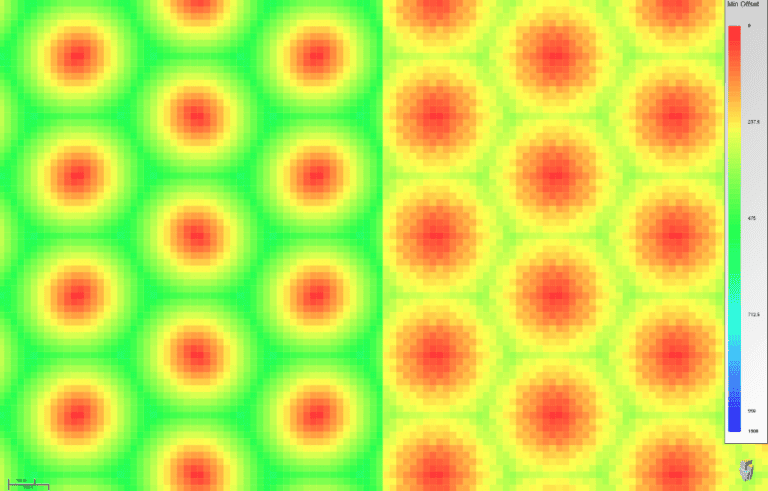
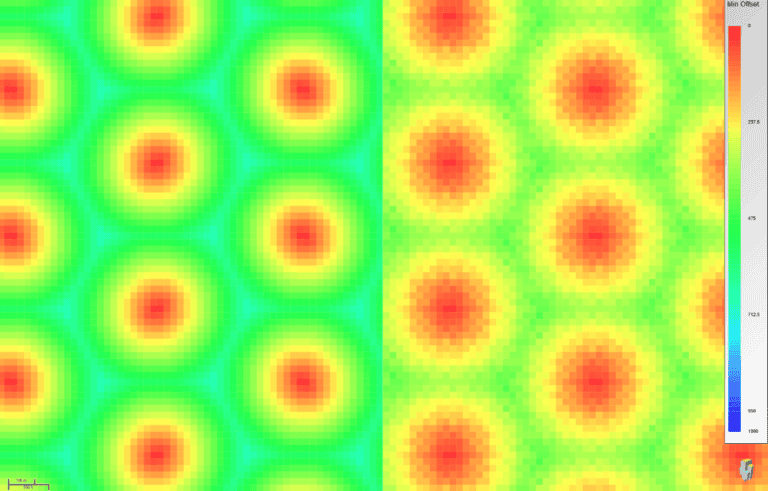
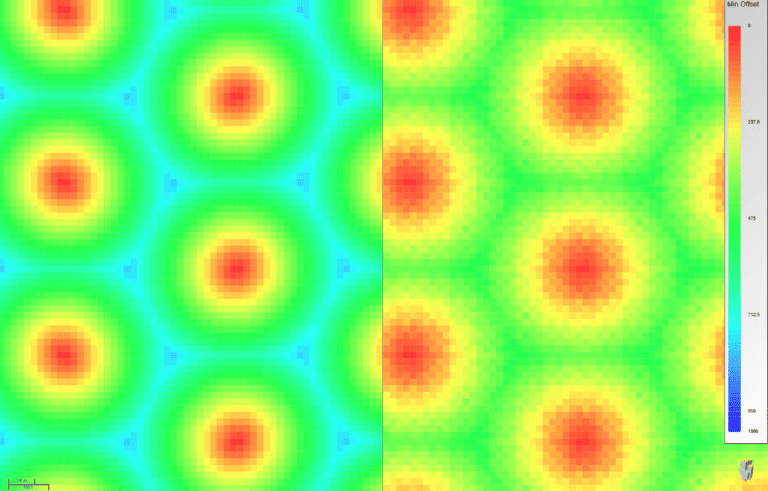
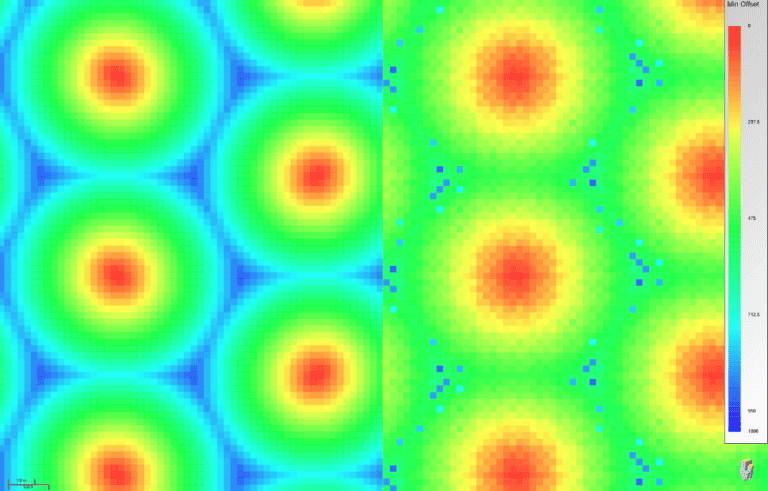
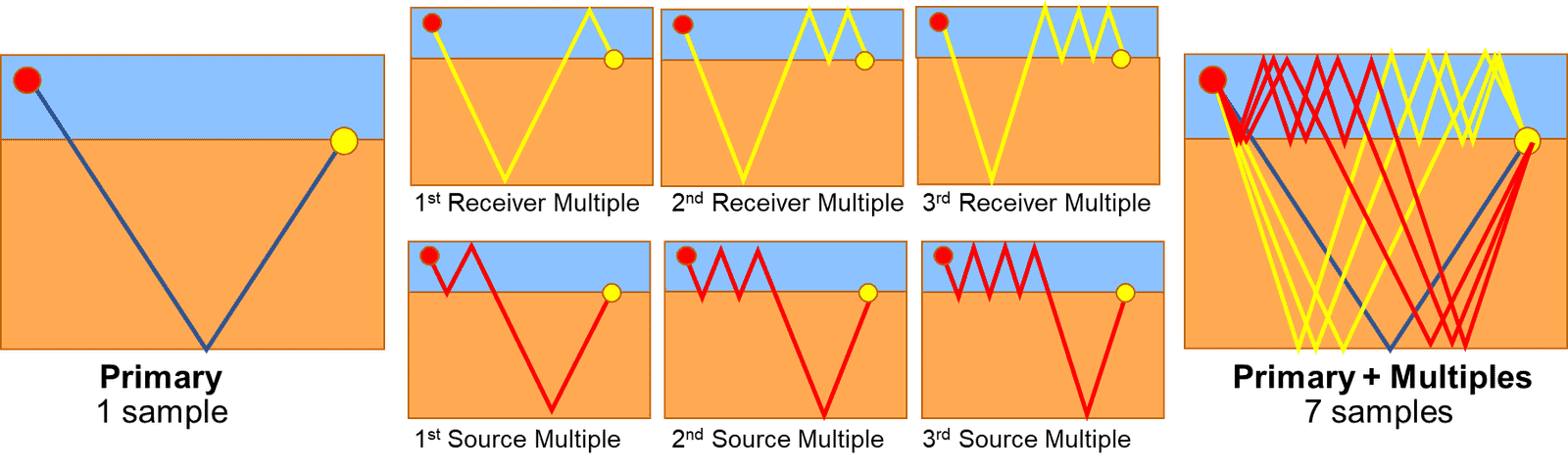
primaries only (left) vs. primaries with water-bottom multiples included (right).
These methods provide practical guidance for designing acquisition programs that are fit for FWI while remaining compatible with conventional imaging workflows.
The goal is not to abandon established principles. The goal is to extend them — so acquisition decisions are informed directly by FWI requirements as well as imaging considerations.